Compare the best poker
See the top list or jump straight to an operator that suits your playing style.


Two players can sit down at what looks like an identical poker table — same stakes, same game, same software brand — and one of them can legally see a real-time readout of the other's tendencies: voluntarily-put-in-pot percentage, fold-to-3-bet frequency, aggression factor, updated hand by hand. The other cannot, because the network they are playing on treats that overlay as a rules violation worth an account closure. Heads-up display software — HUDs — sits at the centre of one of the least-discussed regulatory patchworks in online gambling, and the rules genuinely differ enough, network to network, that a habit that is legal and normal on one platform is bannable on the next.
What a HUD actually does
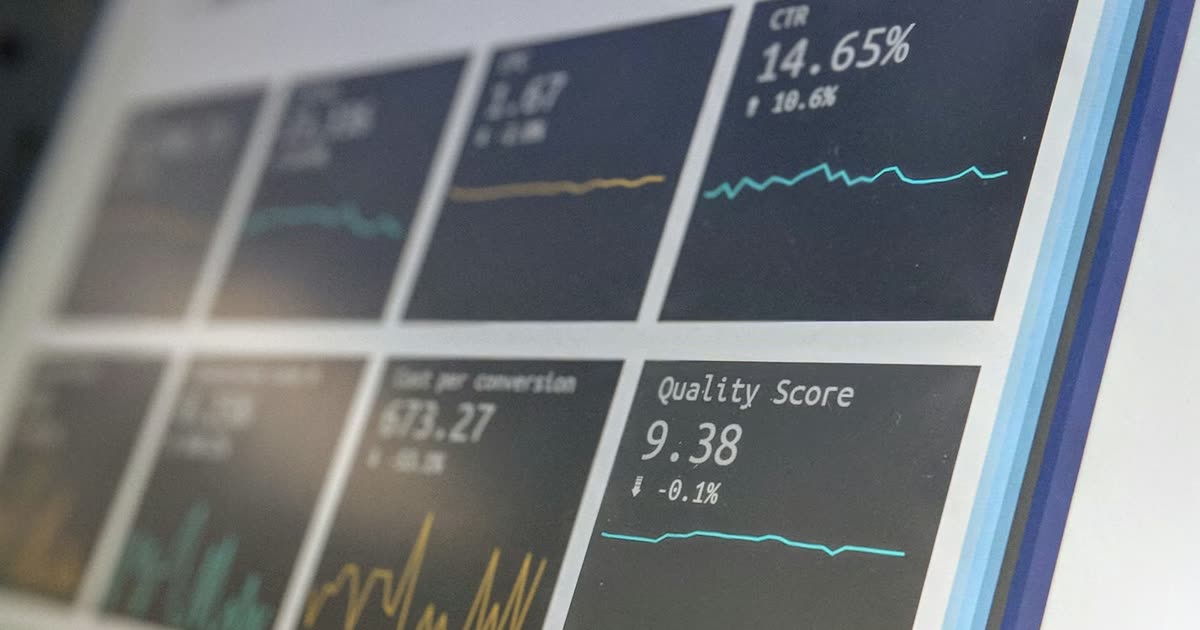
A HUD is an overlay, typically produced by third-party tracking software, that sits on top of the poker client and displays statistics about every opponent at the table — derived entirely from hand histories the software has logged, either from your own sessions or, on more permissive networks, purchased or shared hand-history databases covering opponents you have never played before. None of it requires access to hidden information; everything a HUD shows is reconstructable, in principle, by a human with perfect memory and a notebook. What it actually provides is speed and consistency — the statistical pattern a sharp grinder would eventually notice anyway, delivered instantly and without the fatigue of tracking it manually across several tables.
Why networks land on opposite policies
The split is not random — it follows directly from what kind of player pool a network is trying to protect.
Networks that ban HUDs and real-time tracking
Networks built around recreational-friendly liquidity — the ones explicitly marketing a softer, less grindable game — tend to prohibit third-party HUDs and tracking outright, sometimes going further with anonymous tables, where opponents display as generic numbers rather than persistent usernames precisely so no statistical profile can attach to them across sessions. The commercial logic is explicit: recreational players who feel out-gunned by regulars armed with software leave faster, and a network's whole value proposition is the size and softness of its pool, which we mapped in detail in our liquidity guide. Enforcement typically runs through the client itself — blocking known HUD processes from running alongside it, or restricting the hand-history exports a HUD would otherwise ingest.
Networks that allow full HUD use
Other networks — historically the ones built around a competitive, high-volume grinder culture — permit HUDs and treat statistical tracking as a legitimate skill layer, the same category as note-taking or studying opponents between sessions. Hand histories are freely exportable, usernames persist across sessions, and an entire commercial ecosystem of tracking software, training material and shared databases has grown up around this permissive stance.
The middle ground: official, on-platform stats only
A third approach has grown more common: the network builds a limited statistics overlay directly into its own client — showing a handful of basic numbers, refreshed at a deliberately throttled rate — while banning third-party software that would show more, update faster, or draw on outside databases. This gives players some information without the arms-race dynamic of unrestricted third-party tools, and it is the shape most new poker platforms have converged on when launching in recent years.
What actually happens if you use a banned HUD
This is not a grey area worth testing. Poker networks that prohibit third-party tracking classify unauthorised software as a terms-of-service breach in the same enforcement category as botting or collusion — not because a HUD is equivalent to a bot, but because the enforcement mechanism, detecting unauthorised software interacting with the client, is shared. The standard consequence is account closure with funds frozen pending review, and in confirmed cases, forfeiture of the balance under the same clause that governs botting. There is no proportionality tier for "I only used it for basic stats" — the software either ran against the network's rules or it did not.
The real edge a HUD provides, honestly stated
It is worth being precise about the size of the advantage, because both sides of the marketing overstate it. Independent estimates and player-tracked results in the poker training literature commonly put a well-used HUD's contribution to a competent regular's win rate in the range of 2–5 big blinds per 100 hands at typical online stakes — meaningful over volume, far from decisive in any single session, and dwarfed by short-term variance. A losing player does not become a winner by installing tracking software; a winning player becomes a somewhat bigger winner, mostly through faster, more consistent application of reads a good player would eventually make anyway.
The cross-border wrinkle: data protection law
International players sit inside another layer entirely: hand-history sharing and aggregated opponent databases move personal gameplay data across borders, and where a player is physically located can determine which data-protection regime applies to information collected about them at the table. The EU's General Data Protection Regulation, in particular, has pushed some networks serving European players toward tighter restrictions on how long third-party hand-history data can be retained and shared, independent of the network's own competitive-fairness policy. A player logging in from inside the EU — whether from Hungary, Romania, or anywhere else in the bloc — is, in principle, covered by rules about their own gameplay data that a player logging in from outside it is not, even at the identical table. This is a genuinely unsettled area in practice, and it is a second, independent reason a network's HUD policy can differ by where its players are actually sitting, on top of the purely competitive reasons above.
How to check before you install anything
- Read the terms-of-service section on "third-party software" or "unauthorised software" before installing a tracker — not the marketing page, the actual terms document, which is where the enforcement clause lives.
- Check whether the client technically blocks HUD overlays. Some networks detect and block known tracking-software processes automatically; the software failing to attach is itself the answer.
- Look for anonymous-table formats as a strong tell — a network running anonymous cash tables has already signalled that HUDs are unwelcome even where the terms are vaguely worded.
- Ask support directly, in writing, before relying on the answer. Policies do change, and a written confirmation is worth more than a forum post from two years ago if a dispute ever arises.
FAQ
Is using a HUD considered cheating?
Not in the sense of accessing hidden information — everything a HUD shows is derived from observable hand history. Whether it is allowed is a separate question, purely a matter of each network's own rules, and breaching those rules carries real consequences regardless of whether the underlying activity feels like cheating to the player using it.
How do I find out a specific network's policy before I sign up?
The terms of service is the authoritative source; treat any player forum or affiliate page describing a network's HUD policy as a starting point to verify, not a final answer, since policies do change over time.
Do mobile poker apps support HUDs the same way desktop clients do?
Generally no — mobile clients are more locked-down platforms, and most third-party tracking software targets desktop clients specifically. A HUD policy written with desktop play in mind does not automatically tell you what is technically possible, or enforced, on the same network's mobile app.
Can a network ban me retroactively for HUD use it only started prohibiting later?
Policies can and do change, and networks generally reserve the right to apply new rules going forward rather than retroactively — but the safer assumption for any active player is to re-check terms periodically rather than assume a tool that was fine last year still is.
Editorial note
Written by the Grand Bonuses editorial team from operator terms, regulator registers and our own country-by-country checks. Operators do not edit their reviews. Gambling is paid entertainment; play with a limit. Read more about our editorial process and our guidelines for responsible gaming.